The Project: Translating Inflammatory Biomarkers to Predict Disease Progression in Alzheimer’s Disease (TIDE-AD)
Alzheimer’s disease affects people very differently. Some individuals experience slow changes over many years, while others decline much more rapidly. At present, doctors cannot reliably predict who is at higher risk of faster deterioration. The TIDE-AD aims to change this by identifying simple blood tests and clinical features that can help predict disease progression. One of the main aims was to identify the role of both acute and chronic inflammation – activity of our immune system – in predicting clinical decline in Alzheimer’s disease.

In this study, 333 people living with mild-to-moderate Alzheimer’s disease were followed over 18 months. We measured specific blood markers linked to brain injury and inflammation, including p-tau217 and GFAP, and recorded episodes of delirium — a sudden, serious change in cognition or memory often triggered by illness, infection or surgery.
The study found that people with higher levels of p-tau217 and GFAP, and those who experienced delirium, were more likely to experience faster decline in memory, thinking and daily function. By improving our ability to predict disease progression, this research brings us closer to more personalised care for people living with Alzheimer’s disease.
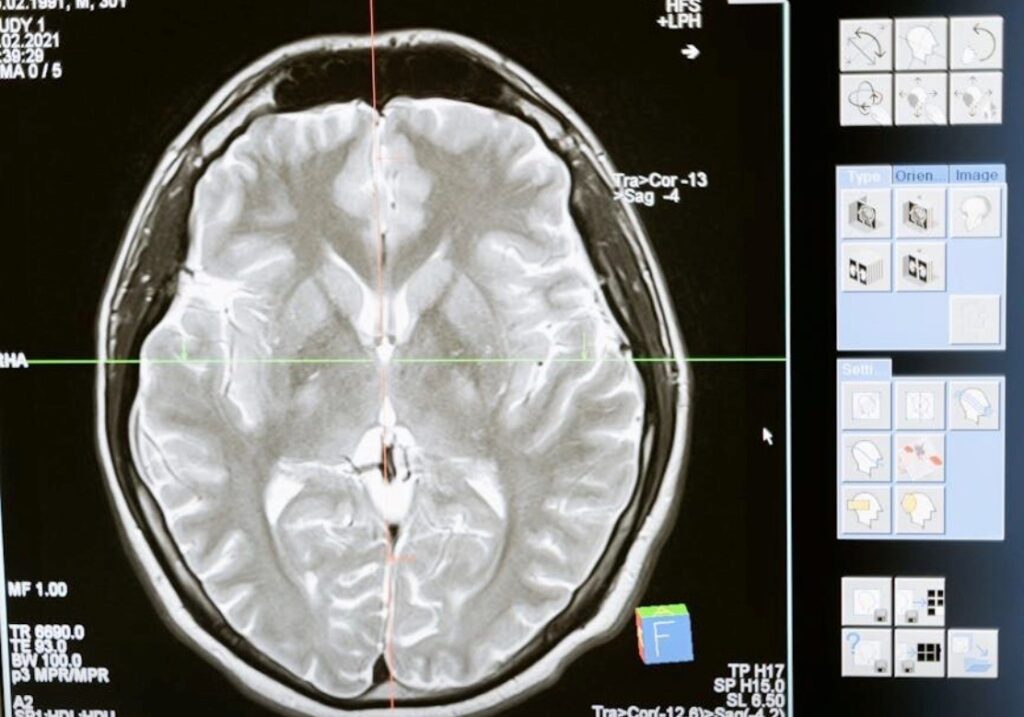
Researchers found that two blood based bio markers -p-tau217 , which reflects Alzheimer’s disease proteins in the brain, and GFAP , which reflects brain inflammation were strongly associated with faster loss of memory thinking ability and independence
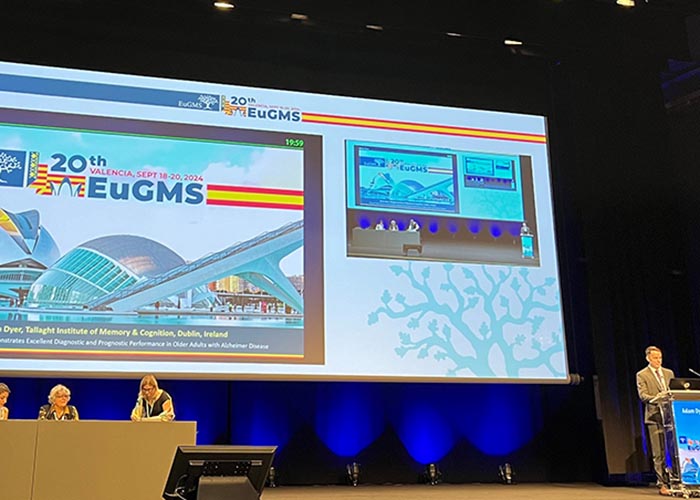
Dr Adam Dyer presenting data from DRIVE AD and NH IMMUNE projects at EUGMS 2024
How the study benefits patients in TUH and beyond
Direct and future benefits for patients
The findings from the TIDE-AD study have several important implications for patient care:
- Earlier risk identification: Blood-based biomarkers could help clinicians identify patients at higher risk of rapid decline earlier in the disease course.
- More personalised care: Patients identified as higher risk could benefit from closer follow-up, earlier support services, and tailored treatment plans.
- Better hospital care: Recognising delirium as a key risk factor highlights the importance of delirium prevention during hospital admissions — something that can directly improve outcomes for patients attending Tallaght University Hospital.
- Improved clinical trials: These markers may help ensure the right patients are included in future Alzheimer’s treatment trials, increasing the chance of finding effective therapies.
This research supports the move towards simple blood tests being used in routine clinical practice, reducing reliance on invasive or expensive investigations and improving access to high-quality dementia care across Ireland and internationally. TUH anticipates that this test will become available within specialist memory services in the hospital later this year, enabling earlier, integration of these advances into clinical pathways. This represents a significant step towards translating research findings into real-world patient benefit.
Outputs From TIDE-AD
In addition to presentations at National (Irish Gerontological Society, Killarney, 2025) and International (EuGMS, Reykjavik, 2025 & ADPD, Copenhagen, 2026) conferences, the main TIDE-AD results paper is published in the prestigious peer-reviewed journal eBioMedicine.
Papers
- 2026
Dr Adam Dyer, Tallaght University Hospital (2021-2025), and a Clinical Lecturer at Trinity College Dublin
Dr Adam Dyer is a clinician-scientist and Specialist Registrar in Geriatric Medicine and General Internal Medicine at Tallaght University Hospital (2021-2025), and a Clinical Lecturer at Trinity College Dublin.
He recently completed a PhD in Medical Gerontology at Trinity College Dublin and is an Irish Academic Clinical Training (ICAT) Fellow (2021-2028). His research focuses on Alzheimer’s disease, brain ageing, blood-based biomarkers, and the impact of systemic illness — particularly delirium and inflammation — on cognitive decline in older adults. Dr Dyer has published >75 papers, many in leading international journals, and leads multiple collaborative studies aimed at improving diagnosis, prognosis, and care for people living with dementia. Dr Dyer has led the TIDE-AD study (Principal Investigator: Professor Sean Kennelly) as part of his PhD work in Tallaght University Hospital. As part of this work Dr Dyer has been awarded National (William Stokes Award, RCPI; Presidents Prize Irish Gerontological Society) and International (Steffania Maggi Award, EuGMS) awards.